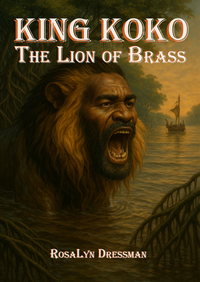
In the fading light of the 19th century, when the tide of empire swept across the Niger Delta, one man dared to resist. The Lion of Brass tells the extraordinary story of King Frederick William Koko, Mingi VIII of Nembe, whose courage and conviction challenged the might of the Royal Niger Company and the British Crown itself. This is not just a chronicle of war and politics, it is a human story of faith, betrayal, resilience, and the unyielding demand for dignity. From the mangrove creeks of Nembe to the chambers of Westminster, the book traces the arc of Koko’s life: a teacher turned ruler, a Christian who wrestled with conscience, and a leader forced to choose between submission and survival. When the Company’s monopolies strangled the trade and freedom of his people, Koko struck back leading twenty-two war canoes against the British depot at Akassa in 1895. The retaliation was swift and brutal, but his defiance shook an empire and set in motion the revocation of the Company’s charter four years later. Through archival research, oral histories, and poetic reconstruction, The Lion of Brass restores Koko to his rightful place in the history of Nigeria and the wider world. His story unfolds as both tragedy and triumph showing that even in defeat, truth can find its way through the smoke of empire. Beyond Nembe’s waters, the book expands its lens to examine how the echoes of that struggle shaped modern Nigeria: the birth of colonial rule, the amalgamation of 1914, and the long road toward independence. It also connects the past to the present, revealing how the struggles of the Niger Delta today over oil, environment, and equity are born of the same questions Koko once asked: Who controls the wealth of the land? Who speaks for her people? The Lion of Brass is both history and elegy, both remembrance and renewal. It is the voice of a river that would not be silenced, the testament of a kingdom that defied erasure, and the enduring roar of a king who stood against the tide.