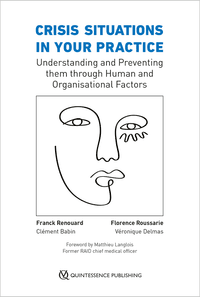
Knowledge in the fields of neuroscience and cognitive science has advanced dramatically in recent years. This has profoundly transformed our understanding of human behavior, both in normal everyday activities and during acute crisis situations. Many unsubstantiated beliefs long taken for granted are now giving way to explanations grounded in solid scientific data. This two-part book publication offers a unique exploration of the mechanisms that lead practitioners and their teams, when under stress, to behave inappropriately. The first part sets out the scientific foundations of these stress-response behaviors, drawing on the discipline of Human and Organisational Factors (HOF). This discipline involves studying how people, technology, and systems interact to influence safety, efficiency, and performance, which is critical for reducing error and boosting safety culture. HOF shows how stress, cognitive overload, or loss of control impair judgment and are detrimental to communication and team performance. Protective measures against these risks are extensively described and applied to real-life scenarios. Numerous case studies provide a clear understanding of how this approach works. The second part describes the main critical situations likely to arise in a dental practice, ranging from fires to medical emergencies, including the management of challenging patients. Here, scientific knowledge is translated into concrete tools that can be used to prevent, confront, and resolve destabilizing events. Based on rigorous research that is relatively novel in the dental field, the book offers readers a fresh perspective on crisis management and team dynamics. It provides valuable tools to enhance the safety, reliability, and resilience of dental practices. The authors, with their wide variety of professional expertise, have proven knowledge and practical experience in the discipline of HOF and are actively involved in teaching and promoting it.